


How to Refocus After an Interruption
Pause, note where you stopped and set a tiny next step so returning to the task feels less daunting.

Why re-entry is the hard part
You are midway through a piece of work — a report, a budget, a set of lesson plans — when the phone rings, a colleague appears at your desk, or a child needs something urgently. Ten minutes later, you sit back down. The screen is still there, but the thread has gone. You read the same sentence three times, click between tabs, and eventually decide to "just check email first". An hour disappears.
The interruption itself is rarely the problem. Most of us can absorb a two-minute disruption without much damage. What derails us is the re-entry: the moment we try to reconstruct where we were, what we were thinking, and what we meant to do next. That reconstruction is mentally expensive, and when it feels too hard, we avoid it. The trick is not to prevent every interruption — that is impossible — but to leave a trail that makes returning easy.
Pause before you rush back in
When you finally get back to your desk, the instinct is to dive straight in. Resist it for ten seconds. Rushing back into a complex task without re-orienting yourself is how small errors creep in: a wrong figure, a duplicated sentence, a reply sent to the wrong person.
Instead, pause and ask one question: “Where was I?” Not “what should I do now?” — that is a bigger question. Just locate yourself. If you can, do this at the moment of interruption, before you turn away. Say to yourself, “I was comparing the two quotes on page four.” That single sentence is a lifeline. If the interruption is sudden and you cannot pause, do it as soon as you return, before you touch anything.
Write a re-entry note
The most reliable way to make re-entry gentle is to write a short note. Not a to-do list, not a project plan — a re-entry note. Three lines are plenty:
- Where I was: “Comparing quotes in the Smith file, page four.”
- What I was about to do: “Check the delivery date against the calendar.”
- Anything pending: “Waiting on a reply from the finance team before I can finalise.”
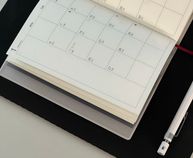
Write it on paper if you can. A small notebook, an index card, or a sticky note on the edge of your monitor works beautifully. Digital notes are fine, but they tend to disappear into a sea of open tabs. Paper stays visible and does not compete for screen space. The act of writing also forces you to clarify your own thinking, which makes the note more useful than you expect.
Set a tiny next step
Now make the next step almost laughably small. Not “finish the report”, but “open the report and type the first sentence of the introduction”. Not “sort out the invoices”, but “open the spreadsheet and type today’s date in cell A1”.
The purpose of a tiny step is to lower the barrier to starting. When you return to your desk, you do not have to decide anything. You just do the small thing. And once you have done it, momentum usually takes over. If it does not, set another tiny step. Two minutes of easy action beats twenty minutes of avoidance.
Be specific. “Work on presentation” is vague and easy to resist. “Open the slide deck and add the title slide” is concrete and nearly impossible to fail at.
Use the note as your ramp back in
When you return, read the note before you do anything else. Not email, not messages, not the news. Read the note, then do the tiny step. That is the whole routine.
If the interruption lasted longer than expected — a meeting ran over, a crisis took an hour — give yourself a minute to re-read the note and re-orient. Do not expect instant focus. The note is not a magic switch; it is a ramp. Walk up it slowly. You will be back in the task faster than if you had tried to jump straight in.
One more thing: if you cannot remember what the note means, that is useful information. It means the task was more complex than you thought, or you left it in a messy state. Next time, write a slightly fuller note. The routine improves with practice.
Make it a habit (and reduce future interruptions)
The whole routine takes about thirty seconds. The challenge is remembering to do it when you are already flustered. Attach it to something you already do: keep a pen and index card next to your keyboard, or create a single note on your phone that you overwrite each time. After a week, it becomes automatic.
You can also reduce the damage of future interruptions. If you work in a shared space, agree a simple signal with colleagues — headphones on means “please come back later”. Batch small queries into one check-in rather than answering each one as it arrives. And when you finish a work session, leave a re-entry note for your future self, even if you are not interrupted. It makes the next morning feel far less daunting.
Interruptions are part of life. You will not eliminate them. But you can make coming back feel like a small, calm step rather than a cliff edge. Pause, note where you stopped, set a tiny next step — and let the note do the hard work for you.

Post a comment